People refer to this vast place only as the desert since no one remembers what was here before. The golden age of human beings has long passed. Now there is only sand, and the only hope is in the humidity.
Travelers cross the desert that stretches from the slopes of the Akaishi Mountains to the cliffs of Seaclaw. Half-ruined ancient cities are home to the last human communities struggling to survive by foraging for what little green remains standing. These desert travelers transport goods on the backs of their caterpillars. Although their only goal is to make as much money as they can, at the same time and in a more or less deliberate way, they are helping to bring life back to the desert by carrying small plants from the artificial greenhouses of the cities to the most remote corners of this ocean of sand.
Designed by Ariel Di Costanzo and Javier Pelizzari and illustrated by Ernest Sala, Sand is a game with a main mechanism of pick-up-and-deliver that can be enjoyed alone or in groups of up to four players in games of about 120 minutes long. Players have to earn as much gold as possible after six rounds (five in a four-player game) to win.
In Sand, players put themselves in the shoes of these intrepid desert travelers who travel the paths of the board and visit the different towns. They collect goods to take them to other places and thus earn gold for the transport service. They cross the dunes on the backs of their faithful caterpillars, which, cared for, will grow and help players complete their tasks more effectively. Along the way they will be joined by helpful companions and be entrusted with missions that, if completed, will bring good benefits at the end of the journey. Help the plants take root again, and perhaps there is still some hope for this desolate place...
It's 1977. You're an up-and-coming musician, dreaming of making it big with your band. Over the next few months you'll rehearse, play gigs, write songs, and promote your band. With careful planning and a little luck, you'll earn the most fame and become the best new artist of the year.
Designed by Jackie Fox (member of the 1970’s rock band "The Runaways", four-time Jeopardy! champion, and designer of the narrative adventure trilogy The Adventures of the Chubby Slugz) and illustrated by Jennifer Giner, Rock Hard: 1977 allows games for groups of between 2 and 5 players, from 14 years old, in games lasting about 45-90 minutes.
Rock Hard: 1977 is played over a maximum of nine rounds, each representing a typical day of one month in 1977, from April to December. You win the game by accruing the most fame. How? Increasing reputation, chops and songs; achieving production, performance, and publicity bonuses; getting record deals and earning royalties; playing concerts; and hanging out at the hottest after-hours spot. Ready to live like a rock star?
3 op voorraad - Voor 15:00 besteld is morgen in huis
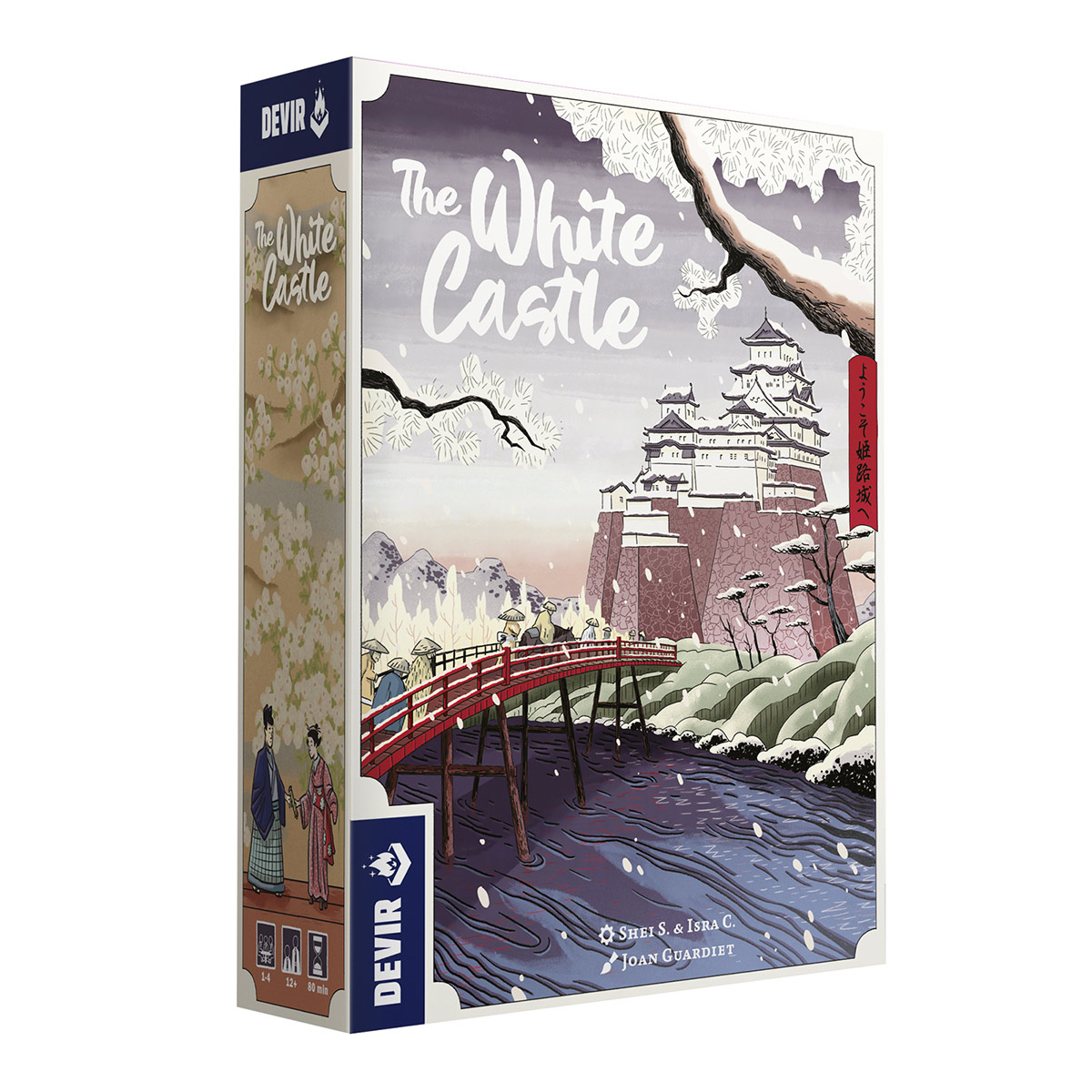
The heron flies over the Himeji sky while the Daimio, from the top of the castle, watches his servants move. Gardeners tend the pond, where the koi carp live, warriors stand guard on the walls, and courtiers crowd the gates, pining for an audience that brings them closer to the innermost circles of the court. When night falls, the lanterns are lit and the workers return to their clan.
In The White Castle, players will control one of these clans in order to score more victory points than the rest. To do so, they must amass influence in the court, manage resources boldly, and place their workers in the right place at the right time. The authors are Sheila Santos and Israel Cendrero, the duo known as Llama Dice who also designed the successful The Red Cathedral with Devir. In this case, we leave the Moscow of Ivan the Terrible behind to explore the most imposing fortress in modern Japan, Himeji Castle, where the banner of the Sakai clan flies under the orders of Daimio Sakai Tadakiyo.
The White Castle is a Euro type game with mechanics of resource management, worker placement and dice placement to carry out actions. During the game, over three rounds, players will send members of their clan to tend the gardens, defend the castle or progress up the social ladder of the nobility. At the end of the match, these will award players victory points in a variety of ways.
The central panel shows Himeji Castle in all its splendor, divided into several zones. The largest is inside the castle, with the Room of the Thousand Carpets, where the courtiers must ascend socially until they reach the circle closest to the Daimio to enjoy his favor. There is also the pond and the gardens, patiently tended by the gardeners where everyone can relax and contemplate its beauty without restriction. Another important area is the wall and the outside of the castle, where the warriors patrol and stand guard. Finally, we find the area of the three bridges, where the three types of dice that can be used to carry out actions are accumulated, and the personal domain of each player, where they will keep track of their resources and where they will have the reserve of workers.
With accessible rules and a very careful setting, The White Castle is a very versatile title that will fit in with different gaming groups. As is tradition with Llama Dice titles, its sleek and simple design belies a great deal of strategic depth within the grasp of players.
1 op voorraad - Voor 15:00 besteld is morgen in huis
Enjoy a new taste of Bitoku with Bitoku: Resutoran, a three-module expansion that you can add to the base game as you prefer. Do you want the full menu? Add all of them! Do you want to try a bite? Add just one, and enjoy the banquet. Itadakimasu!
Modules include new Iwakura rocks, new Yokai cards, and three new types of Kodama Lake. Also, Resutoran includes a new deck of cards that will allow players to activate certain effects during the game, such as modifying dice results (whether their own and opponents') or gaining a lot of points.
The tea ceremony lies at the heart of Japanese culture, giving life the most essential and elemental concepts of hospitality, respect, and Zen philosophy. There, they believe that tea, which came from China in the 13th century, resolved the health problems of the Buddhist monks who drank it. Over the years, the tea ceremony evolved to offer the samurai a place of calm, far from the chaos of the battlefield.
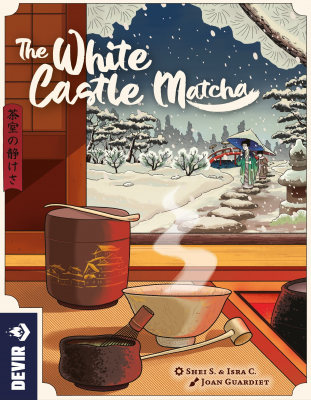
In The White Castle: Matcha, you will have to deal with a new place in which to influence the court using new members of your clan. Having members of your clan in good seats within the Chashitsu (tea room) will help you achieve a greater level of influence within the court of Himeji. Also, you will have one additional action each round. Will that be enough?
1 op voorraad - Voor 15:00 besteld is morgen in huis
Een toegankelijk en strategisch bordspel, dat zich afspeelt in het oude Moskou"De Rode Kathedraal" is een strategisch bordspel waarin spelers bouwteams leiden om St. Basil's kathedraal in Moskou op te richten. Leid jouw team, wijs secties toe, stuur middelen en voltooi de bouw, terwijl je je rivalen omzeilt. De tsaar kijkt toe en alleen de meest bekwame bouwer zal zijn gunst winnen. Met een prachtig eerbetoon aan de kunst van Ivan Bilibin biedt dit spel toegankelijke regels en diepgaande strategie voor uren speelplezier.
Jerusalem, spring 33 AD. A crowd gathers at the city gates to welcome Jesus of Nazareth as he prepares to celebrate Easter with his apostles and followers. With a revolutionary message, he has garnered supporters everywhere but also looks of suspicion among religious authorities. The Last Supper will soon be celebrated and the fate of one of the most influential characters in human history will be sealed.
In Ierusalem Anno Domini, each player represents one of the communities of followers of Jesus of Nazareth who, coming to Jerusalem from nearby towns and villages, want to approach the place of the Last Supper and position themselves as close as possible to the seats of Jesus and his apostles.Designed by Carmen G. Jiménez and illustrated by L.A. Draws, Ierusalem Anno Domini can be played alone or with up to 4 participants. The goal of the game is to gain points sitting your followers at the table of the Last Supper. The closer they are to the apostles and to Jesus himself, the more victory points they will provide at the end of the game. The parabola tiles that we have accumulated, or the offering tokens will also give us points.
Different locations are shown on the board: the market, the desert, the mountain, the lake and the temple. After sending our followers to one of these locations, we will obtain stones, bread and fish, as well as denarii or cards that will allow us to do more than one action. Among these actions, players will be able to choose between listening to a parable, going to the table, changing seats or doing a favor, among others. All this will happen while the patience of the Sanhedrin runs out. When this happens, symbolized by a tile moving in a marker, the endgame is triggered.
However, the main element of the game is the cards. Each card has a symbol corresponding to one of five key locations in the game. As you play them, combinations will be formed that will allow us to bring the apostles to the table of the Last Supper. The optimal placement of our followers around Jesus and the apostles will also be done through the management of letters, as well as various resources at our disposal.
Behind a very immersive theme, Ierusalem Anno Domini will not disappoint lovers of good challenges. Players will have a wide range of possibilities at their fingertips and multiple ways to earn victory points. Preparing the best strategies to get the most out of your followers will be one of the keys to victory. Devout gamers don’t need to look further: Here is your ga