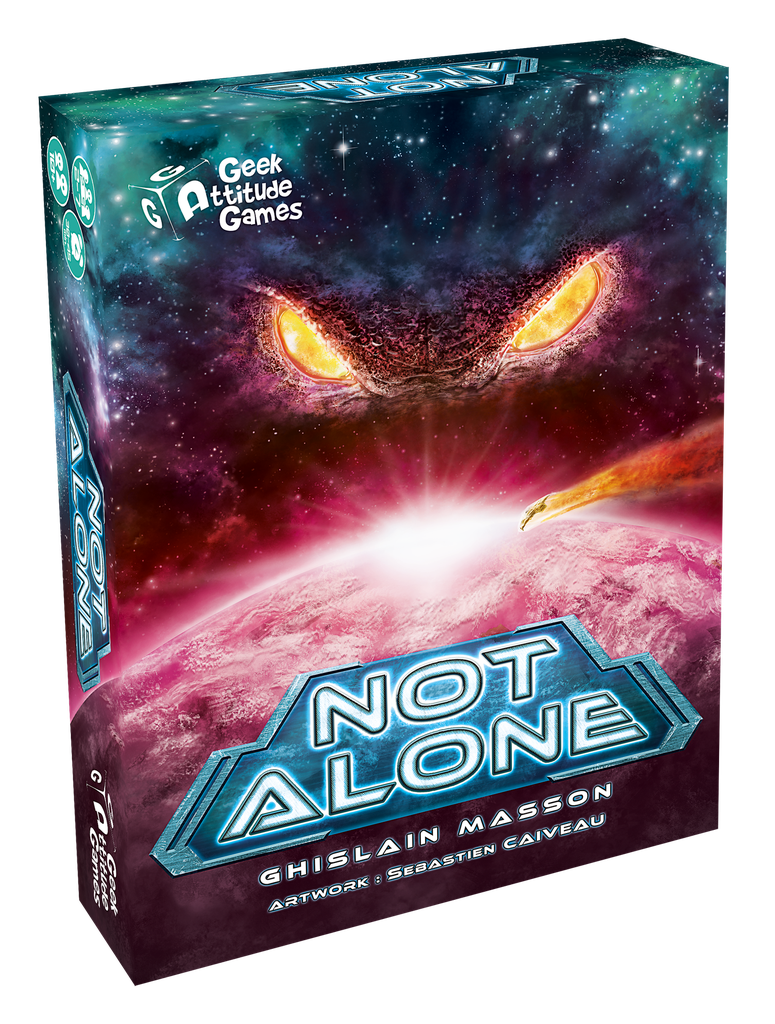
Not Alone speelt zich af in de 25e eeuw. Je maakt deel uit van een intergalactische expeditie die is neergestort op de mysterieuze planeet Artemia. Terwijl je wacht op het reddingsteam besluit je om de planeet te onderzoeken. Maar een buitenaards wezen zit je op de hielen en opent de jacht... Je bent duidelijk niet alleen! Slaag jij erin om de gevaren van Artemia te trotseren?
Not Alone is een asymmetrisch kaartspel waarin één speler (het Wezen) het opneemt tegen alle andere spelers (de Prooi). Maak je deel uit van de Prooi, dan onderzoek je Artemia met behulp van Locatiekaarten. Door deze kaarten samen met Overlevingskaarten uit te spelen, probeer je het Wezen te ontlopen, verwarren of af te leiden tot er versterkingen arriveren. Speel je als het Wezen, dan jaag je op de schipbreukelingen,. Door je Jachtkaarten uit te spelen en de mysterieuze krachten van Artemia aan te wenden, probeer je het Moreel van de Prooi onderuit te halen en hen zo door de planeet te laten absorberen.
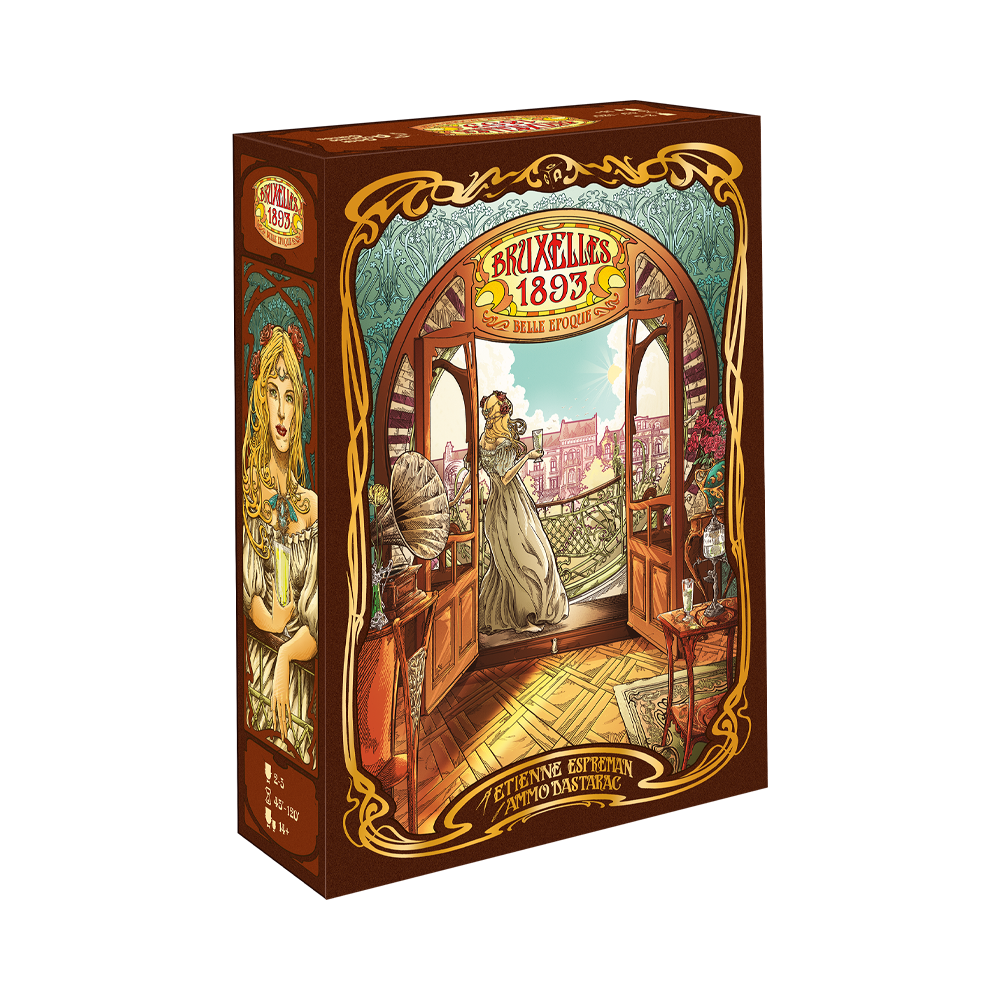
This new edition of Bruxelles 1893 is completed with its Belle Époque expansion, both offered in a single big box. Although it respects the spirit of the original game, this new version of Brussels 1893 has been mechanically, graphically and ergonomically redesigned. Those who love Brussels 1893 will find all the pleasure of the original game, and even more because Belle Époque considerably expands the strategic possibilities, without increasing the length of a game.
In the Belle Époque expansion, players will experience:
New Public Figures and White Works of Art
Blocker Tiles and End Game Goals
Special Actions and a Brand New Material
Bruxelles 1893 is a worker placement game with elements of bidding and majority control. Each player is an architect of the late 19th century and is trying to achieve, through various actions, an architectural work in the Art Nouveau style. The most successful building yields the most points. Each player can also create works of art to increase his score.
The action board is modular, with not every player having access to each action each turn. Some actions cost money – acquiring high-quality materials, building a level of your personal house, finding a patron, creating a work of art, selling that art for money and prestige – while other actions are free but can potentially cause you to lose one of your workers; these latter actions include acquiring low-quality materials, activating your patrons, visiting the stock exchange, and taking one of the actions with a cost. Once everyone has passed on taking more actions, the round ends and players have an art exhibition during which they can sell works. After this, players receive prestige points or bonus cards based on the symbols they've placed their workers next to on the action board.
After five rounds, the game ends and players score bonus points based on their architect level, their bonus cards, how well they've completed their work, and their money on hand. The player with the most points wins.
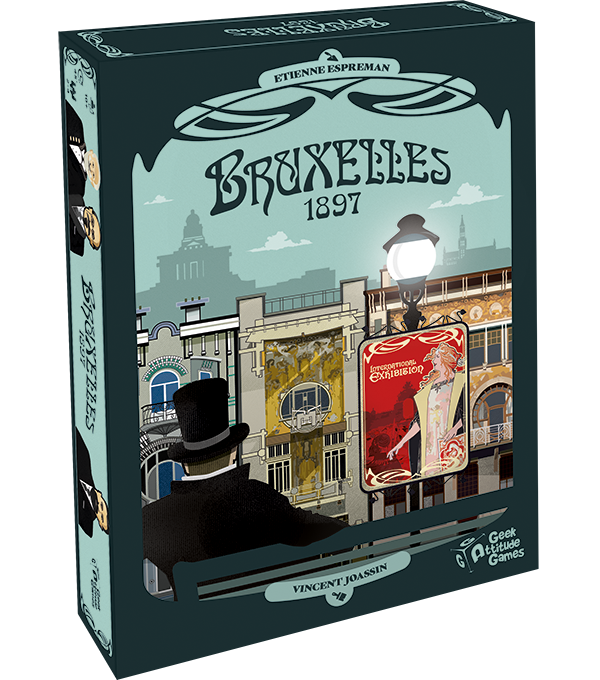
We schrijven het jaar 1897. De kunststroming Art Nouveau is prominent aanwezig in de straten van Brussel, en de Wereldtentoonstelling opent zijn deuren. Het is tijd om jouw naam te vereeuwigen in de Kunstgeschiedenis. Om je reputatie te vestigen, zal je je kunstwerken tentoonstellen en verkopen, architecturale hoogstandjes construeren, en je sociale kring uitbouwen.
Bruxelles 1897 is een strategisch kaartspel dat over 4 rondes verloopt. Tijdens je beurt gebuik je je Architectkaarten om Art Nouveau in Brussel te verspreiden. Aan het eind van elke ronde bepaalt de plaatsing van je kaarten waar je de meerderheid hebt en welke bonussen je ontvangt. Aan het eind van het spel wordt de speler met de meeste punten uitgeroepen tot Architect van het jaar.